Protect Our Water and Environment
Potential Disastrous Outcomes for MN Farming Community From Proposed Mine
Proposed Limestone Mine in Waterford Township
A large mining company seeks permits to establish and operate a large-scale limestone mining and processing facility within Waterford Township. The proposed site covers approximately 317 acres, with mining planned on 223 acres for an estimated 50 years. Operations would run Monday-Friday 7 am to 6 pm and Saturdays 7 am to 12 pm. The plan involves topsoil/overburden removal, drilling, blasting, extensive groundwater pumping (“dewatering”), crushing, washing, screening, stockpiling, and hauling limestone aggregate via trucks. The limestone resource is primarily the Prairie du Chien Group (Shakopee and Oneota formations).
This proposal poses profound risks to our community’s essential resources, environment, health, and rural way of life. The scale of the operation, particularly the massive water withdrawal required, necessitates extreme caution. Based on the significant potential for irreversible harm, our community must take a clear stance: Say NO to this limestone mine and NO to the proposed dewatering.
Detailed Concerns & Why Caution is Critical
- Unprecedented Dewatering & Groundwater Threat:
- The Scale: The mine requires pumping groundwater 24/7 to keep the pit dry, potentially removing 4 billion gallons per year (up to 10 or 11 million gallons daily). This staggering volume is comparable to the water consumption of 220,000 people – In comparison, Waterford Township has about 525 people, Northfield about 21,177 people, Elko/New Market about 5,048 people, Nerstrand about 272 people, Castle Rock 1.542 people and Randolph 465 people.
- Aquifer System at Risk: This water will be pumped from our sensitive Karst aquifer system, specifically impacting the Prairie du Chien and Jordan Aquifers. These interconnected aquifers are the primary source (90-95%) of drinking water for Dakota County and are regionally significant for Rice and Goodhue Counties. Karst geology allows for rapid groundwater movement through fractures and conduits, offering little natural filtration and making these aquifers highly vulnerable to depletion and contamination.
- Cone of Depression: Continuous pumping creates a “cone of depression,” lowering the water table over a potentially wide area. The Kraemer Quarry in Burnsville, another limestone operation, caused a 70-foot drop in the local Prairie du Chien aquifer. We face a similar or worse risk here.
- Long-Term Impact: Removing this much water for 50 years raises profound questions about the long-term sustainability of our water supply, especially with increasing drought frequency. Will the company seek expansion of mine in the future?
- The Stance: NO to Dewatering. This level of water withdrawal is unsustainable and poses an unacceptable threat to our shared water resources.
- Risk to Private Wells (Residential & Agricultural):
- Wells Drying Up: The cone of depression can easily lower the water table below the depth of existing private wells, especially shallower ones common in Waterford. Many residents and farms rely entirely on these wells.
- Vulnerability Factors: A well’s risk depends on its depth, proximity to the mine, and its specific connection to the aquifer’s conduit system. Detailed well inventories and impact studies are crucial but may not capture all risks.
- Contamination & Quality: Besides quantity, water quality is a concern. Blasting can increase turbidity (cloudiness). Changes in water levels or flow could increase mineral content (like iron), potentially requiring costly filtration systems for drinking, household use, and sensitive crops. Mining activities also risk contamination from fuel spills or other materials.
- Responsibility & Cost: Who pays if wells fail? Residents face significant stress and expense for potential well replacement or connection to alternative supplies. While MN law prioritizes domestic and agricultural water use, resolving well interference issues can be lengthy and complex.
- Damage to Surface Waters & Ecosystems:
- “Losing Streams”: Lowering the groundwater table can reverse the natural flow, causing surface waters like the streams that flow into the Cannon River and the Cannon River (which flows through Rice County and affects Goodhue County) to lose water into the ground/quarry, depleting their flow. The Spinler Quarry turning the Straight River into a losing stream is a documented Minnesota example.
- Discharge Impacts: Pumping billions of gallons of potentially warmer, silt-laden water into Chub Creek could cause flooding, erosion, alter the creek’s channel, and harm aquatic life (fish, mussels) in the creek, downstream in the Cannon River, Lake Byllesby, and potentially the Mississippi River and other water ways.
- Wetland Destruction: Wetlands near the site, vital for filtering runoff and providing wildlife habitat, could be drained or significantly altered by the lowered water table.
- Carleton Arboretum: The nearby Cowling Arboretum (in Rice County), a significant natural and recreational resource dependent on the Cannon River floodplain, is also threatened by these hydrological changes, as well as potential noise and dust.
- Blasting Impacts:
- Aquifer Structure: Blasting can create new fractures or widen existing ones in the limestone bedrock, permanently altering groundwater flow paths in unpredictable ways.
- Water Quality: Vibrations can shake sediment loose within the aquifer, increasing turbidity in wells. Incomplete detonation can also release chemical residues.
- Stability: Blasting vibrations can potentially destabilize the ground in this Karst terrain, increasing the risk of sinkholes.
- Traffic Overload & Safety Hazards:
- Volume & Damage: The projected 165 to 440 truck trips per day (up to 40 per hour, averaging one truck every few minutes during peak times) represents a massive increase on our rural roads. Heavy trucks cause exponentially more road damage than cars, accelerating wear and tear and increasing taxpayer costs for maintenance. Our gravel roads are not designed for this.
- Safety: Increased heavy truck traffic significantly raises safety risks for residents, school buses, farm equipment, and recreational users (walkers, bikers, horseback riders). Concerns exist about specific intersections (Hwy 3 & 86) and potential for trucks using unauthorized routes.
- Haul Route: The proposed primary route is Arkansas Ave to CSAH 86, then west to Hwy 3 or east to CSAH 47.
- Environmental Degradation:
- Air Pollution: Quarry operations (drilling, blasting, crushing, hauling) and diesel trucks generate significant dust, including respirable crystalline silica (a known carcinogen), and emissions like NOx, Particulate Matter (PM2.5/10), CO, and CO2, impacting health and the environment.
- Noise Pollution: Blasting, heavy machinery, and constant truck traffic will destroy the peace and quiet of our rural community.
- Habitat Loss: Over 223 acres of farmland and existing habitat will be destroyed, impacting wildlife and pollinators essential for agriculture. Mining limestone also removes a natural carbon sink.
- Socioeconomic & Community Impacts:
- Property Values: Industrial operations like this quarry are likely to decrease nearby property values.
- Rural Character: The project is incompatible with the established agricultural and rural residential character of Waterford Township. Concerns exist that zoning protections were weakened in 2019.
- Economic Questions: The long-term costs (road maintenance, potential well issues, environmental degradation) borne by the community may far outweigh the tax revenue or limited job creation.
Community Cautions & Recommended Actions
Our community’s vigilance and action are crucial:
- Engage in the Environmental Review (EIS): The mandatory Environmental Impact Statement (EIS) is our primary opportunity to ensure all potential impacts (including cumulative and long-term, 50-year impacts) are rigorously and impartially studied. Scrutinize the draft EIS when released, submit detailed comments, and demand thorough answers. Insist on independent expert review of critical areas like hydrogeology.
- Attend Meetings & Contact Officials: Regularly attend Waterford Township meetings (2nd Thursday, Sciota Town Hall). Contact Township Supervisors, County Commissioners (Dakota, Rice, Goodhue), and State Legislators. Share specific concerns and reference information from this report and the provided documents.
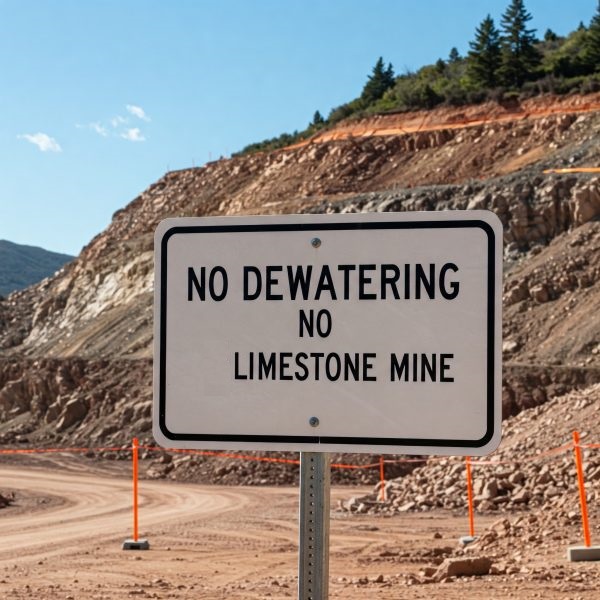
- Focus on Dewatering: Continuously emphasize the unacceptable scale and risk of the proposed dewatering. It is the single largest water use proposed and poses the greatest threat. Make “NO DEWATERING” a central message.
- Document Baseline Conditions: Encourage documentation of current well water levels and quality, road conditions, and noise levels to establish a baseline before potential impacts occur.
- Unite & Organize: Support local efforts like the Waterford MN Conservation Society. Share information, display signs, sign petitions, and encourage neighbors across affected counties to get involved. A strong, informed, collective voice is powerful.
- Demand Accountability: Question proposed mitigation plans – are they truly sufficient and enforceable? Who is financially responsible if mitigation fails or wells run dry? Ensure adequate financial assurance is required from the company.
Conclusion: Protect Waterford – Say NO to the Mine
The proposed Bryan Rock limestone quarry represents a profound threat to the water resources, environmental health, agricultural foundation, and rural character of Waterford Township and the surrounding region. The risks associated with massive dewatering in our sensitive Karst geology are too high, the potential impacts on wells and surface waters too severe, and the disruptions from traffic, noise, and pollution too great. We must urge our elected officials to deny the necessary permits and prioritize the long-term health and sustainability of our communities and shared environment. We must stand together and say NO to this mine and NO to dewatering our aquifers.
Aquifers, Streams, Rivers, Ponds, Lakes, Wetlands, Marshes, Prairie, Woods, All Wildlife, Farm/Family/Business/Community Land, Private and Public Wells, Air, Water the Fire Hydrants, City/Town Water Supply, Sewer Treatment Plants, Cost Of City Water,
 Minnesota Protect Our Water