Protect Our Water and Environment
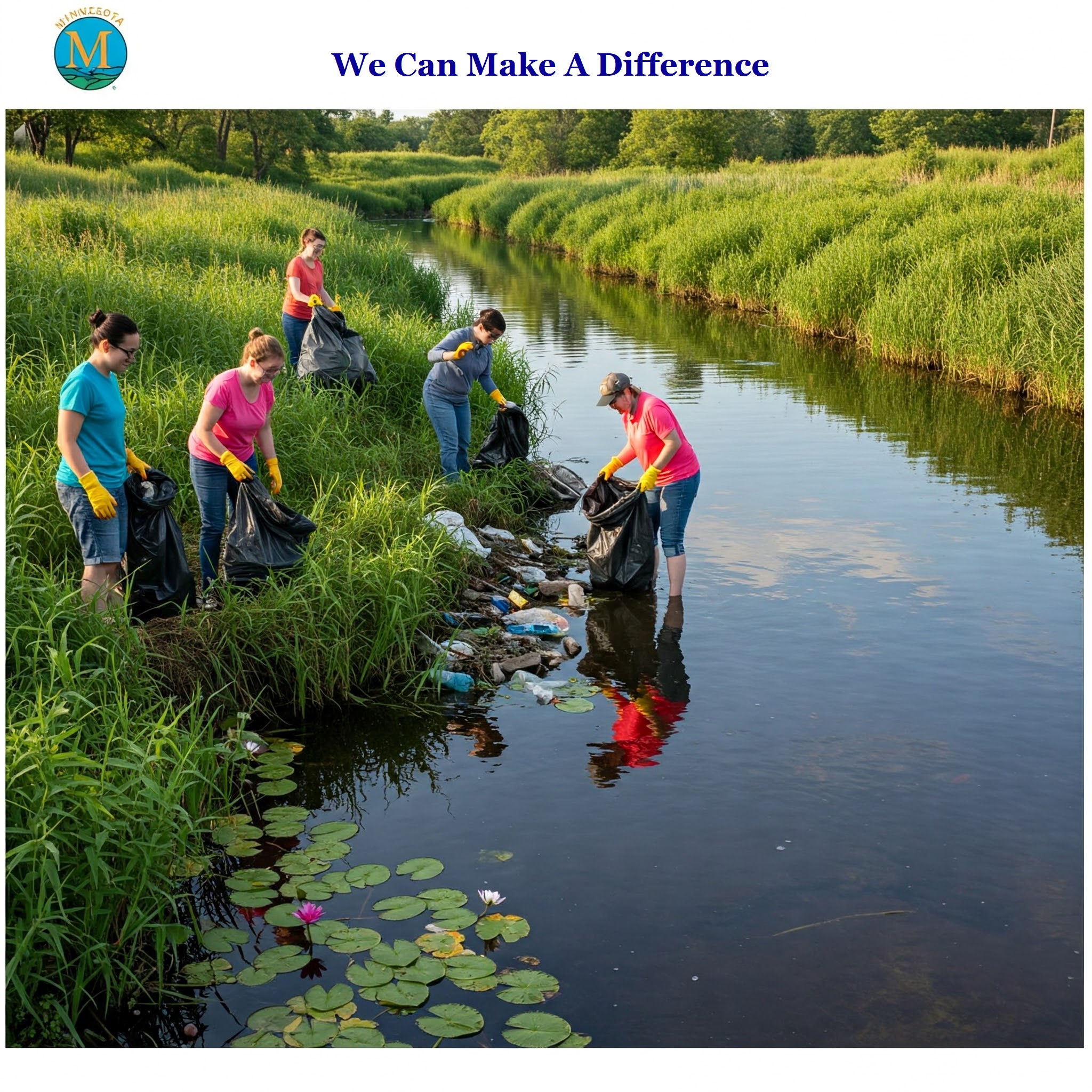
Here are a few ways you can help
1. Educate Yourself and Others
- Learn: Understand your local water system: where your water comes from (aquifers like Karst, Prairie Du Chien, Jordan; rivers like the Cannon and Mississippi), how it’s replenished, and what threatens it. Understand the impacts of de-watering aquifers for long periods. Find out where your drinking water comes from (which aquifer or river). Learn how these water sources are naturally refilled and what keeps them healthy.
- Share Information: Discuss the proposed mine, de-watering concerns, and potential impacts on local events (like Defeat of Jesse James Days), recreation (fishing, tubing, trails), farming, fire departments, and conservation areas with family, friends, neighbors, and co-workers.
- Use social media, emails, videos, memes, yard signs, and bulletin boards to spread awareness. Share information at family gatherings, school functions, and community events.
- Download and share “Waterford Conservation Society” Brochure and Paper Petition
2. Engage with Local Governance and Petitions
- Contact Officials: Reach out to the Waterford Township Board politely and truthfully, citing sources when possible. Write letters/emails, call, or message them on social media about your concerns. Let them know the community is concerned and watching.
- Sign Petitions: Sign the online or paper petition opposing the Waterford mine (“Waterford MN No Mine”). Ask others to sign and consider hosting the paper petition at your business and other events.
Start Petitions: Consider starting petitions for other projects threatening local water resources.
3. Support Local Conservation Efforts
- Waterford MN Conservation Society: Connect with this group of concerned citizens working to preserve township values. Find them on Facebook ~ Waterford MN Conservation Society
- Brochure
- Paper Petition
4. Participate in Research and Innovation
- Find Alternatives: Help uncover and promote better, more sustainable ways to extract minerals or create desired products using renewable materials.
- Understand Impacts: Research the environmental consequences of de-watering, deep mining, and large-scale earth removal on surrounding land and waterways.
- Legal Routes: Explore legal avenues to prevent destructive projects.
5. Practice Water Conservation and Watershed Stewardship
- Conserve at Home: Reduce water usage generally. Harvest rainwater for gardens/lawns. Consider water conservation rebates for efficient appliances if applicable (check local programs like Northfield’s).
- Wise Lawn Care: Water lawns efficiently (about 1 inch per week, applied at once, early morning). Avoid overwatering. Let grass grow taller (over 2 inches) to promote deeper roots and reduce evaporation. Use fertilizers and herbicides wisely. Direct downspouts to lawns/gardens. Sweep grass clippings back onto the lawn or compost them; keep them off paved surfaces to prevent phosphorus runoff into waterways.
Community Watershed Protection: Understand that actions on land impact water quality downstream. Support community planning that minimizes impervious surfaces, protects trees and natural areas (like stream buffers), and controls erosion. Encourage Best Management Practices (BMPs) like rain gardens, bioswales, and porous pavement.
6. Be creative and follow your heart to what inspires you, speak out in your way.
- Use your talents and passion, your speciality skill, knowledge and crafts
- Share your experiences and love of our rivers, environment and communities. Organic gardens, fishing, hiking and biking, environmental rehabilitation projects,
7. Talk to your family, friends, neighbors and co-workers about
- Minnesota State and City wide water restrictions and regulations
- What does your state, county and local area ask of you to help keep our rivers clean while they allow big businesses poison and deplete our ancient water ways
- Cost of water from city and cost of well maintenance
- What minerals and impurities are in your water now and how it is being handled
- Compare water health now and after mines, water bottling companies and meta plants begin
- How this could affect events like Defeat of Jesse James Days, all river events, farmers market, fishing, tubing, canoeing/kayaking and so much more
- How will this affect our fire department, farmers, wetlands, nature conservation areas and more
- What are the hidden costs to us and our communities. What have passed mining operations cost Minnesota and our environment
8. Foster Community & Spiritual Connection:
- Reflect & Appreciate: Take time for reflection or prayer, expressing gratitude for our environment and focusing on the health of our aquifers and rivers.
- Gather for Support: Form or join prayer/reflection groups (in person, online, church groups) to build hope and community wellness.
Every Action Counts!
Find the ways to get involved that best suit your talents and passion. Do what you can with what you have. Speaking out and getting involved makes a difference in protecting our shared home and resources. We are the only ones who can make a difference.
- Contact Waterford MN Conservation Society
- FB ~ Waterford MN Conservation Society ~ Protecting Our Water and Environment
- Waterford Township Offices
- Waterford Township
State Agencies
- Minnesota Department of Natural Resources (DNR)
- Relevance: Responsible for issuing water appropriation permits (which the quarry project will require for de-watering) and managing state natural resources, including groundwater and potential impacts on rare species. They also handle well interference issues.
- Contact:
- Phone: 651-296-6157 or 888-MINNDNR (646-6367)
- Website/General Contact: https://www.dnr.state.mn.us/contact/index.html
Minnesota Pollution Control Agency (MPCA)
- Relevance: Regulates air emissions, water quality (including NPDES permits for discharges from de-watering and processing), potential contamination, hazardous materials/waste handling, and noise [cite: 474, 887, 898, 988, 1048, 1072, 1262, 1267, 1273, 1315-1319, 1354, 1355, 1388, 1498, 1516-1533, 1544, 1555, 1641, 1644, 1657, 3630, 3690, 4625, 4749, 4888, 5220, 5222, 5342, 5358, 7331]. They also handle spill reporting.
- Contact:
- General Phone: 651-296-6300 or 800-657-3864
- Website/Contact Form: https://www.pca.state.mn.us/about-mpca/contact-us
- Minnesota Duty Officer (for spills/emergencies): 800-422-0798
Minnesota Environmental Quality Board (EQB)
- Relevance: Oversees the state’s environmental review process, including the preparation of the mandatory Environmental Impact Statement (EIS) for this project. Public comments during the scoping and draft EIS phases are submitted via the EQB process.
- Minnesota Department of Agriculture (MDA)
- Relevance: Concerned with impacts on agricultural land, potential contamination affecting farms, and regulation of agricultural chemicals. The project involves converting prime farmland.
- Contact: While direct contact details weren’t retrieved, they are a state agency located in St. Paul. You can likely find contact information through the main Minnesota state government website (mn.gov).
- Minnesota Department of Health (MDH)
- Relevance: Oversees drinking water safety, including potential impacts on private wells and wellhead protection areas.
- Contact: While direct contact details weren’t retrieved, they are a public health department located in St. Paul. You can likely find contact information through the main Minnesota state government website (mn.gov).
State Political Figures
- Governor of Minnesota
- Relevance: As the head of the state’s executive branch, the Governor oversees state agencies and sets policy direction.
- Contact:
- Phone: 651-201-3400
- Address: 130 State Capitol, 75 Rev Dr. Martin Luther King Jr. Blvd., Saint Paul, MN 55155
- You can typically find a contact form or email address on the Governor’s official website via mn.org
Minnesota State Legislators:
- State Representative Drew Roach (R – District 58B)
- Capitol Phone: 651-296-1069
- Capitol Email: rep.drew.roach@house.mn.gov
- Capitol Office: 2nd Floor, Centennial Office Building, St. Paul, MN 55155
- Official House Page: https://www.house.mn.gov/members/profile/15642
- State Senator Bill Lieske (R – District 58)
- Capitol Phone: 651-296-5019
- Capitol Email: sen.bill.lieske@mnsenate.gov
- Capitol Office: Minnesota Senate Building, Room 2327, St. Paul, MN 55155
- Official Senate Page: https://www.senate.mn/members/member_bio.html?mem_id=1272
U.S. Representative Angie Craig (DFL – District 2)
- Washington, DC Office:
- Phone: (202) 225-2271
- Address: 2052 Rayburn House Office Building, Washington, DC 20515
- Eagan, MN Office:
- Phone: (651) 846-2120
- Address: 1915 Plaza Dr, Suite 202, Eagan, MN 55122
- Website/Contact Form: https://craig.house.gov/contact
U.S. Senator Amy Klobuchar (DFL)
- Washington, DC Office:
- Phone: 202-224-3244
- Fax: 202-228-2186
- Address: 425 Dirksen Senate Building, Washington, DC 20510
- Minnesota Office (Greater Metro):
- Phone: 612-727-5220
- Address: 1200 Washington Avenue South, Room 250, Minneapolis, MN 55415
- Website/Contact Form: https://www.klobuchar.senate.gov/(Website](https://www.google.com/search?q=https://www.klobuchar.senate.gov/)(Website) lists additional regional offices in MN)
U.S. Senator Tina Smith (DFL)
- Washington, DC Office:
- Phone: 202-224-5641
- Address: 720 Hart Senate Office Building, Washington, DC 20510
- Website/Contact Form: https://www.smith.senate.gov(You can find MN office locations and contact forms here)
Understanding the Concerns in Waterford
The proposed limestone quarry by Bryan Rock Products in Waterford Township raises several environmental concerns, particularly due to the area’s sensitive Karst geology and its connection to vital aquifers like the Prairie Du Chien and Jordan Aquifers. Key issues include:
Water Resources: The project plans extensive de-watering (up to 145 feet deep, potentially up to 4 billion gallons per year for 50 years). This could lower the water table, potentially causing private wells to dry up and impacting surface waters like the Cannon River, Chub Creek, and nearby wetlands. The discharge of dewatering water also needs management to protect downstream water quality.
- Karst Geology Risks: The area’s Karst features (like sinkholes) make it vulnerable. Dewatering and blasting can destabilize the ground, potentially leading to new sinkhole formations or collapses. Karst systems also allow for rapid contaminant transport.
- Air Quality: Dust from drilling, blasting, crushing, processing, and hauling can impact air quality and respiratory health.
Land Use & Community: The project would convert over 223 acres of prime agricultural farmland. Increased truck traffic (up to 200 trips/day) will affect local roads (including Arkansas Ave, CR 86, Hwy 3, CR 47) and communities like Northfield, Hampton, Farmington, Lakeville, Cannon Falls, and Randolph. Noise from operations and blasting is also a concern.
Ecological Impacts: Habitat loss and potential impacts on wildlife, including the state-endangered loggerhead shrike, are concerns. Proximity to the Carleton College Arboretum also raises concerns about potential impacts from noise, dust, and hydrological changes.
 Minnesota Protect Our Water